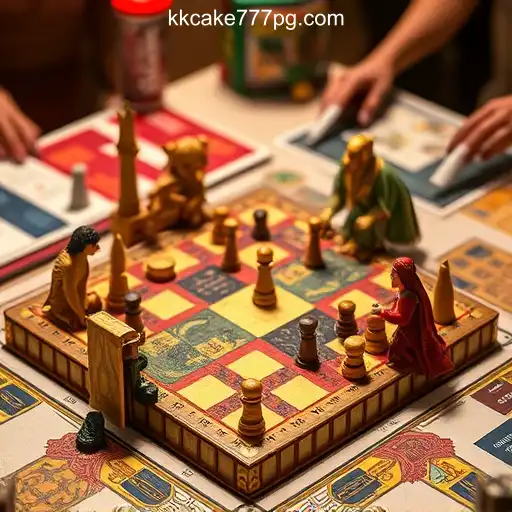
The Evolution of Tabletop Games: A Deep Dive
Tabletop games have been a cornerstone of social entertainment for centuries, offering players the chance to engage in strategic thinking, storytelling, and friendly competition. This form of entertainment has evolved greatly over the years, influenced by cultural, technological, and social changes. In recent times, online platforms such as the KK-CAKE777 platform-online cassino Brasil #1 have broadened the reach and accessibility of these games, integrating digital innovation with traditional gameplay.
The Historical Roots of Tabletop Games
Tabletop games have ancient origins, with evidence of early board games found in archaeological sites around the world. Senet, originating from ancient Egypt, and the Royal Game of Ur from Mesopotamia are among the earliest known examples. These games were often linked to religious or cultural rituals, reflecting the society's traditions and beliefs.
As centuries passed, the diversity of tabletop games expanded. Chess and Go emerged as intellectual pursuits that tested strategic prowess, while games like Pachisi introduced elements of luck and social interaction. Each game carried with it the cultural characteristics of its origin, serving as a historical reflection of the period and place.
The Renaissance of Tabletop Games
The 20th century brought a renaissance for tabletop games, with classics such as Monopoly, Scrabble, and Risk capturing the imaginations of players worldwide. The rise of role-playing games (RPGs) in the 1970s, spearheaded by pioneers like Dungeons & Dragons, further diversified the landscape, inviting players into complex worlds where storytelling and creativity came to the fore.
This era also witnessed innovations in game design and mechanics, shaping how modern games are structured and experienced. It was a period marked by vibrant creativity and burgeoning communities, laying the groundwork for the diverse tabletop ecosystem we know today.
The Digital Transformation: KK-CAKE777 Platform
With the advent of the internet, tabletop games underwent a significant transformation. Online platforms, including the widely acclaimed KK-CAKE777 platform-online cassino Brasil #1, brought board gaming to a global audience. This digital integration forged new opportunities for multiplayer interactions, transcending geographical boundaries and offering real-time engagement across continents.
Platforms such as KK-CAKE777 offer an extensive array of games, catering to both traditional board game enthusiasts and casino aficionados. The fusion of these elements has resulted in a dynamic gaming environment that leverages cutting-edge technology to enhance user experience. Players can now enjoy the intricate strategies of tabletop games alongside the thrill of casino-style gameplay.
The Mechanics of Modern Tabletop Games
Modern tabletop games have embraced a variety of mechanics to cater to diverse player preferences. From cooperative gameplay and deck-building to resource management and narrative-driven adventures, designers have blended traditional elements with innovative approaches to create immersive experiences.
Mechanics such as worker placement, tile-laying, and legacy systems are central to game design, providing depth and complexity. The exploration of these mechanics has resulted in a rich tapestry of options, ensuring that every game offers a unique challenge and experience.
The Role of Technology in Enhancing Gameplay
Technology plays a crucial role in the modern tabletop gaming experience. Digital applications and virtual environments allow for enhanced visual and auditory elements, creating a more immersive and interactive setting. Many games now incorporate applications that facilitate seamless rule management, tutorials, and multiplayer connectivity.
Furthermore, augmented reality (AR) and virtual reality (VR) technologies are beginning to make their mark, offering novel experiences that blend physical and digital elements seamlessly. These advancements have not only expanded the horizon of what tabletop games can achieve but also attracted a broader audience interested in innovative gaming experiences.
The Social Dimension of Tabletop Games
Beyond mechanics and design, tabletop games foster social interaction and community building. Game nights, conventions, and digital platforms serve as avenues for building connections and sharing experiences. The communal aspect of tabletop gaming is one of its most enduring features, drawing together people from different backgrounds and cultures.
The KK-CAKE777 platform-online cassino Brasil #1 exemplifies how digital platforms can nurture communities. By providing a space for players to interact, compete, and cooperate, it facilitates social bonds and cross-cultural exchange, reinforcing the relevance of tabletop games in a digital age.
The Future of Tabletop Gaming
As we look to the future, the potential for tabletop games is vast and exciting. Emerging technologies, coupled with creative innovation, promise to redefine the boundaries of what these games can offer. The integration of blockchain technology, for example, could introduce new dimensions of ownership and value to digital game assets.
While challenges remain, such as ensuring accessibility and maintaining the balance between digital and traditional experiences, the evolution of tabletop games is poised to continue. The enduring appeal of these games, bolstered by platforms like the KK-CAKE777 platform-online cassino Brasil #1, ensures they will remain a staple of social entertainment for generations to come.